AI Cracks Ancient Roman Puzzle Game After 100 Years of Baffling Experts in Shocking Breakthrough

An AI designed for games has figured out a mysterious board game from Roman times that has puzzled scientists for 100 years. This is described in a new study in the journal Antiquity.
The advanced AI, called Ludii, “played the game against itself and identified a few variants that are enjoyable for humans to play,” the machine’s designer Dennis Soemers, a researcher in the Department of Advanced Computing Sciences at Maastricht University, said in a statement.
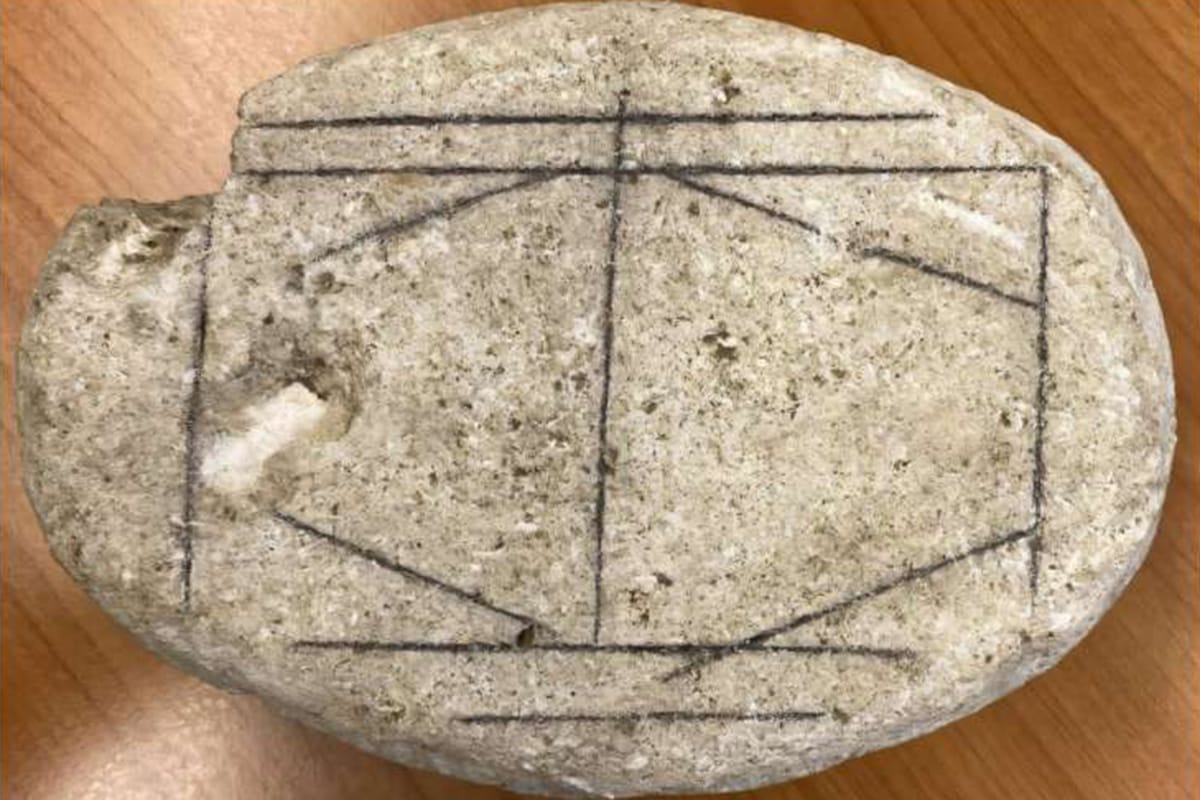
This ends a mystery that started about 100 years ago. A strange limestone tablet with lines carved on it was dug up in Heerlen, Netherlands. That spot was once the Roman town of Coriovallum, as reported by Science News. The 20cm tablet is shown at the local Het Romeins Museum, which focuses on the Roman Empire's time in the Netherlands starting around 19 BC.
Using 3D scans, researchers saw that some lines were deeper than others, showing signs of use from people moving pieces on them.
“We can see wear along the lines on the stone, exactly where you would slide a piece,” says Walter Crist, an archaeologist at Leiden University who specializes in games from antiquity. “The appearance of the stone, combined with this wear, strongly suggests it’s a game.”
To figure out the rules, the team at Maastricht University put the rules of “about a hundred medieval or older games from the same cultural area as the Roman stone” into Ludii.
Like a computer for ancient chess, the AI created dozens of possible rule sets. It then played 1,000 games for each one to find versions that might work for this stone board.
“We tried many different kinds of combinations: three versus two pieces, or four versus two, or two against two,” said Crist, Science News reported.
The researchers compared how pieces would move under these rules to the wear marks on the stone board. They found a good match.
The movements fit a type of blocking game, like tic-tac-toe, played by two people, as reported by Scientific American.
Players would move pieces—probably made of glass, bone, or clay—along the board's lines. The goal was to trap the opponent's pieces in a corner.
This find is important because people thought this kind of blocking game didn't show up in Europe until the Middle Ages.
Now, like on Chess.com, people can play the game online. It's called the “Coriovallum Game” on Ludii, using the rules the researchers came up with.
Even with these good results, Soemers isn't sure they got the exact rules right, since the AI was programmed to find results.
“If you present Ludii with a line pattern like the one on the stone, it will always find game rules,” he says in Maastricht’s statement. “Therefore, we cannot be sure that the Romans played it in precisely that way.”
Still, these results might help use AI to solve more ancient game mysteries.
Archaeologist Véronique Dasen of Switzerland’s University of Fribourg, who wasn’t involved in the study called the discovery “groundbreaking, declaring, “the research results invite [archaeologists] to reconsider the identification of Roman period graffiti that could be actual boards for a similar game not present in texts.”